U.S.-Iran Tensions Grow as Oil Prices Rise Above $90
By Next Play Report News Desk
August 18, 2026
Tensions between the United States and Iran are putting fresh pressure on global energy markets as efforts to reach a lasting peace agreement appear to be losing momentum.
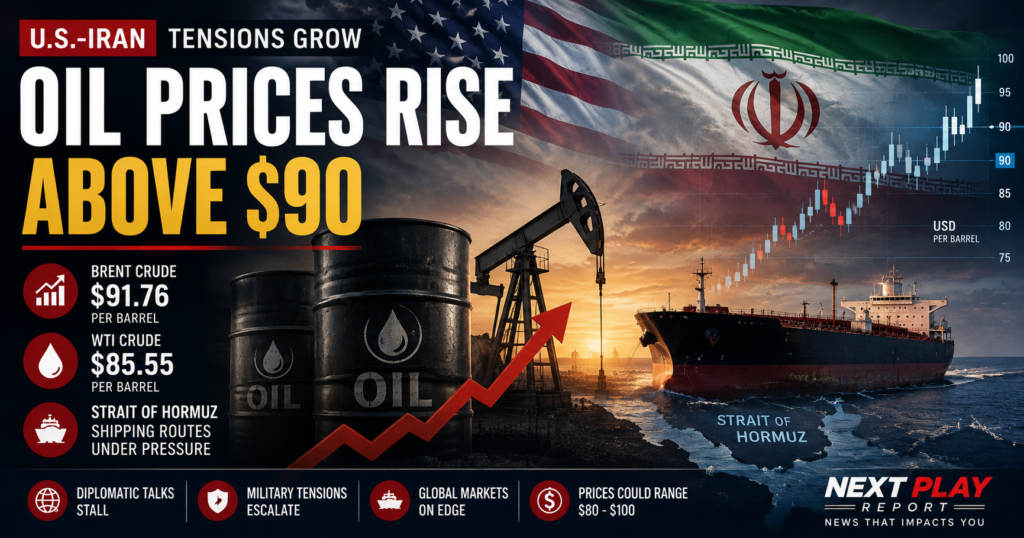
Oil prices climbed for a third consecutive session on Tuesday. Brent crude rose to $91.76 a barrel, while U.S. West Texas Intermediate crude reached $85.55 a barrel. Both benchmarks moved to their highest levels in several weeks.
Peace Efforts Face New Challenges
Diplomatic efforts between Washington and Tehran have stalled, raising concerns that the conflict could continue for longer than previously expected.
Iran has indicated that it could move toward a more offensive military posture if negotiations fail. At the same time, the United States has ruled out extending an interim ceasefire arrangement.
The situation has also affected shipping through the Strait of Hormuz, one of the world’s most important energy routes.
Why Oil Prices Matter to Americans
Higher oil prices can eventually affect everyday expenses in the United States.
When crude becomes more expensive, the impact can spread through the economy. Gasoline prices may rise, while transportation and production costs can also increase.
For American consumers, that means the situation in the Middle East is not only a foreign-policy story. It could also become an economic issue if energy prices remain elevated.
Markets Are Watching Closely
Investors are paying close attention to developments in the region. The longer the uncertainty continues, the harder it becomes for markets to predict where energy prices will go next.
Analysts cited by Reuters expect oil prices could remain volatile, with a potential range of roughly $80 to $100 a barrel in the near term if uncertainty continues.
What Happens Next?
The next major developments will likely depend on whether the United States and Iran can return to meaningful negotiations and whether shipping through the Strait of Hormuz can return to normal levels.
For now, the combination of stalled diplomacy, military tensions and restricted shipping is keeping pressure on oil markets.
Next Play Report will continue to follow the latest U.S. news and developments affecting American consumers and businesses.