How Sports Science Is Changing the NBA: The Technology Behind Peak Performance
By NextPlayReport | September 6, 2026
The modern NBA is no longer shaped by talent and hard work alone. As competition becomes more intense, teams are increasingly turning to sports science, data analytics and advanced technology to help players perform at their best.
From monitoring workload and recovery to studying movement patterns and shooting efficiency, sports science has become an important part of how NBA organizations prepare their athletes.
The NBA’s New Approach to Player Performance
Basketball places enormous demands on the body. NBA players can sprint, jump, change direction and absorb physical contact repeatedly during a game.
Because of that, teams need to understand more than just points, rebounds and assists.
Sports scientists and performance specialists can examine factors such as movement, workload, recovery and physical output. The information can then help coaching and medical staffs make better decisions about training and preparation.
The goal is simple: help players stay healthy while maximizing their performance.
Data Is Becoming a Major Part of Training
NBA teams have access to more performance data than ever before.
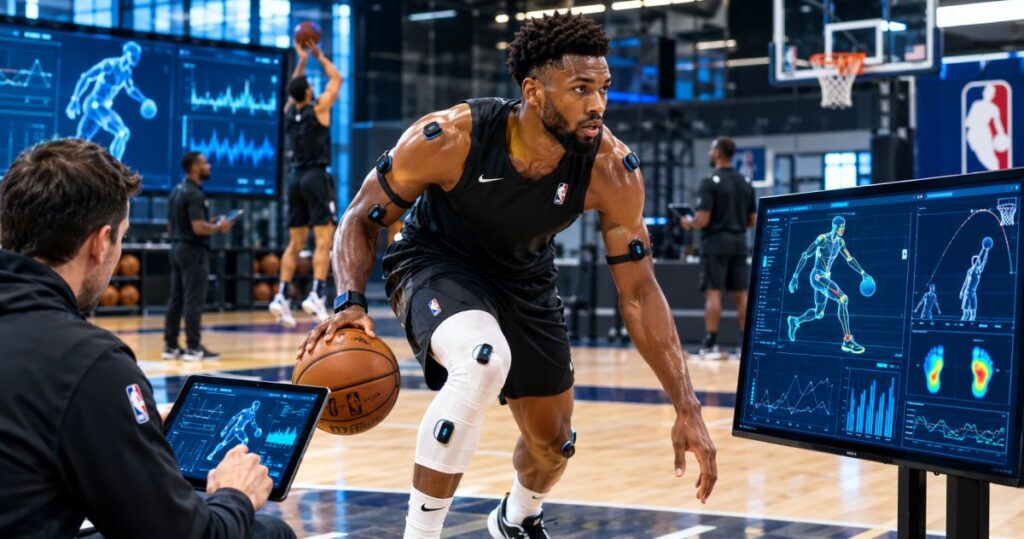
Wearable technology and tracking systems can provide information about an athlete’s workload and movement. Coaches and performance staff can use that information to understand how much stress a player is experiencing during practices and games.
Instead of following exactly the same training program for every athlete, teams can increasingly make adjustments based on individual needs.
That approach can be particularly valuable during the long NBA season, when players face a demanding schedule involving travel, practices and games.
Recovery Has Become Just as Important as Training
One of the biggest changes in professional basketball is the growing emphasis on recovery.
Elite athletes cannot simply train harder every day. Their bodies also need time to recover from intense physical activity.
NBA organizations may use a combination of recovery strategies, performance monitoring and individualized training plans to help players manage fatigue.
Sleep, nutrition, hydration, mobility work and strength training can all play important roles in an athlete’s overall preparation.
The emphasis is shifting from simply asking, “How hard did the player train?” to a broader question: “How well is the player prepared to perform again?”
Biomechanics Can Help Improve Movement
Sports science can also help players become more efficient.
Biomechanical analysis allows specialists to study how an athlete moves. In basketball, that can involve examining jumping mechanics, running patterns, changes of direction and shooting movements.
Small technical adjustments may help an athlete become more efficient or reduce unnecessary physical stress.
For a professional player, even a small improvement can matter when it is repeated thousands of times throughout a season.
Shooting Is Becoming More Scientific
Shooting has always been one of basketball’s most important skills, but modern technology provides new ways to analyze it.
Teams can study shooting consistency, release patterns, shot locations and other performance indicators.
This does not replace traditional coaching. Instead, data can give coaches and players additional information to support what they see on the court.
The combination of coaching experience and objective performance data can create a more detailed picture of a player’s strengths and areas for improvement.
Injury Prevention Is a Major Priority
Player health is one of the most important reasons NBA teams invest in sports science.
No technology can guarantee that an athlete will avoid injury. However, monitoring workload and identifying changes in movement or physical performance may help teams recognize when a player needs additional recovery or a change in training.
Medical professionals, strength coaches, physical therapists and performance scientists can work together to build individualized programs.
This multidisciplinary approach is becoming an important part of modern professional basketball.
Technology Does Not Replace Basketball IQ
Despite the growing role of technology, sports science is not replacing coaches or players.
A computer can provide numbers, but basketball remains a game that requires decision-making, communication, creativity and instinct.
The most effective approach is often a combination of technology and human expertise.
A coach can use data to identify a trend, while a player can provide information about how their body feels. Together, those perspectives can lead to better decisions.
What This Means for the Future of the NBA
The influence of sports science is likely to continue growing.
As technology becomes more sophisticated, NBA teams may gain even more detailed information about player performance, recovery and movement.
The biggest advantage may not come from having the most data. It may come from knowing which information actually matters and how to turn it into practical decisions.
For NBA players, the future of performance could increasingly involve a balance between traditional basketball skills and science-driven preparation.
Final Thoughts
The modern NBA is evolving beyond what fans see during the 48 minutes of a game.
Behind every performance is a growing network of coaches, trainers, medical professionals, analysts and sports scientists working to help athletes perform consistently.
Talent will always remain at the heart of basketball. But in an increasingly competitive league, how effectively a player trains, recovers and prepares could become just as important as what happens on the court.
Sports science is not changing the fundamentals of basketball. It is helping NBA teams understand them in greater detail—and that could give the next generation of players a valuable competitive edge.